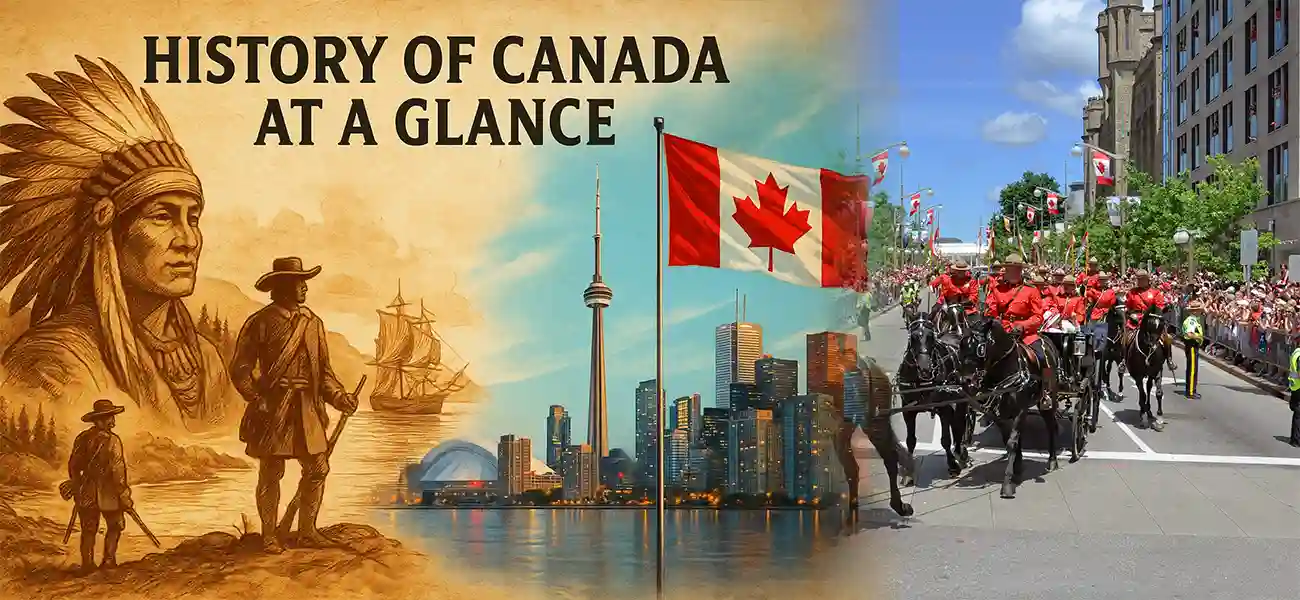
Canadian History: A Guide to
Knowledge for Newcomers
Introduction
Canada's history is like an inscription, woven from
Indigenous traditions, European colonialism, immigration, and the development
of a modern and diverse nation. This guide provides an overview of key events,
achievements, and topics in Canadian history to help newcomers understand the
country's cultural and historical context.
Pre-Colonial Era: Indigenous Peoples
- Indigenous
peoples have lived in Canada for thousands of years and have diverse
cultures, languages, and systems of government.
- The
main indigenous groups include First Nations, Inuit, and Métis.
- Archaeological
evidence, such as the remains of tall houses and petroglyphs, show
advanced societies such as the Iroquois Confederacy and the Metis Nation.
- Oral
traditions and arts such as carved poles and beadwork remain vital parts
of Indigenous identity.
European Exploration and Colonization
- 1497: John Cabot, an Italian explorer traveling under the British flag,
arrives in Newfoundland.
- 1534-1542: Jacques Cartier declares parts of Canada to be French territory.
- 1608: Samuel de Champlain founded Quebec City, establishing the first
permanent European settlement.
- The
fur trade became a central part of the economy, and the Hudson's Bay
Company (founded in 1670) dominated the industry.
Confederation and Expansion
- 1867: Canada becomes a confederation with the passage of the British
North American Act, and the provinces of Ontario, Quebec, New Brunswick,
and Nova Scotia are united.
- Over
time, additional provinces and territories joined the country:
- Manitoba
(1870)
- British
Columbia (1871)
- Alberta
and Saskatchewan (1905)
- Newfoundland
and Labrador (1949)
- The
Canadian National Railway (completed in 1885) played a key role in
connecting the country.
The 20th Century: Growth and Challenges
- World
War I (1914-1918): Canada's important participation in
the war effort led to an increase in national independence.
- 1931: The Statute of Westminster
recognizes Canada's legal independence from Great Britain.
- World
War II (1939-1945): Canadian forces played a pivotal role
in Allied victories such as the Normandy Invasion.
- 1960s: Social changes included the Quiet Revolution in Quebec and the
expansion of multicultural policies.
- 1982: Canada's Constitution and Charter of Rights and Freedoms are
adopted, establishing civil liberties.
Contemporary Canada
- Canada
is a multicultural society in which immigrants from all over the world
have played a significant role.
- Reconciling
with Indigenous people remains one of the main goals, and efforts such as
the Truth and Reconciliation Commission address the legacy of boarding
schools.
- Climate
change, economic development, and immigration policies are shaping modern
Canada.
Key Topics in Canadian History
- Immigration: Canada's population has grown through
waves of immigration from European immigrants to modern newcomers from
Asia, Africa, and Latin America.
- Relations
with Indigenous Peoples: Ongoing efforts to recognize and restore
Indigenous rights and traditions.
- Bilingualism
and multiculturalism: Canada has two official languages (English and
French) and promotes cultural diversity.
- Peacekeeping
and Internationalism: Canada is known for its peacekeeping missions and
assistance to global organizations such as the United Nations.
Important historical places and events
- Rideau
Canal (Ottawa): A UNESCO World Heritage Site.
- Banff
National Park (Alberta): A symbol of conservation and natural beauty.
- Vimi
Ridge: A Place of Canadian Military Heroism in World War I.
- Canada
Day (July 1): Celebrating the founding of the country.
More Resources to Read
- Books:
- A
Short History of Canada by Desmond Morton
- Clearing
the Plains by James Duschak
- Websites:
- Museums:
- Canadian
History Museum (Gatineau, Quebec)
- Royal
Ontario Museum (Toronto, Ontario)
This guide provides a comprehensive
overview for people interested in learning about Canada's rich and complex
history. Exploring these aspects can develop a deeper understanding of the
country and provide a greater appreciation for its cultural diversity and
shared heritage.
Canadian History: A Knowledge Guide for Newcomers
Introduction
Canada’s history is a tapestry woven from indigenous
traditions, European colonization, immigration, and the development of a
diverse and modern nation. This guide provides an overview of key events,
milestones, and themes in Canadian history to help newcomers understand the
country’s cultural and historical context.
Pre-Colonial Era: Indigenous Peoples
- Indigenous
peoples have lived in Canada for thousands of years, with diverse
cultures, languages, and governance systems.
- Major
indigenous groups include the First Nations, Inuit, and Métis.
- Archaeological
evidence, such as the remains of longhouses and petroglyphs, showcases
sophisticated societies like the Iroquois Confederacy and the Métis
Nation.
- Oral
traditions and art, including totem poles and beadwork, remain vital
aspects of indigenous identity.
European Exploration and Colonization
- 1497:
John Cabot, an Italian explorer sailing for England, reached Newfoundland.
- 1534-1542:
Jacques Cartier claimed parts of Canada for France.
- 1608:
Samuel de Champlain founded Quebec City, establishing the first permanent
European settlement.
- Fur
trading became central to the economy, with the Hudson’s Bay Company
(founded in 1670) dominating the industry.
Confederation and Expansion
- 1867:
Canada became a confederation with the passage of the British North
America Act, uniting Ontario, Quebec, New Brunswick, and Nova Scotia.
- Over
time, additional provinces and territories joined:
- Manitoba
(1870)
- British
Columbia (1871)
- Alberta
and Saskatchewan (1905)
- Newfoundland
and Labrador (1949)
- The
Canadian Pacific Railway (completed in 1885) was instrumental in
connecting the country.
20th Century: Growth and Challenges
- World
War I (1914-1918): Canada’s significant contribution to the war effort
led to greater national autonomy.
- 1931:
The Statute of Westminster granted Canada legislative independence from
Britain.
- World
War II (1939-1945): Canadian forces played a pivotal role in Allied
victories, such as the Normandy invasion.
- 1960s:
Social changes included the Quiet Revolution in Quebec and the expansion
of multicultural policies.
- 1982:
The Constitution Act and the Canadian Charter of Rights and Freedoms were
enacted, solidifying civil liberties.
Contemporary Canada
- Canada
is a multicultural society, with significant contributions from immigrants
worldwide.
- Indigenous
reconciliation remains a central focus, with efforts such as the Truth and
Reconciliation Commission addressing the legacy of residential schools.
- Climate
change, economic development, and immigration policies are shaping modern
Canada.
Key Themes in Canadian History
- Immigration:
Canada’s population has grown due to waves of immigration, from European
settlers to modern newcomers from Asia, Africa, and Latin America.
- Indigenous
Relations: Ongoing efforts to recognize and restore indigenous rights
and traditions.
- Bilingualism
and Multiculturalism: Canada has two official languages, English and
French, and promotes cultural diversity.
- Peacekeeping
and Internationalism: Known for its peacekeeping missions and
contributions to global organizations like the UN.
Important Historical Sites and Events
- Rideau
Canal (Ottawa): UNESCO World Heritage Site.
- Banff
National Park (Alberta): Symbol of conservation and natural beauty.
- Vimy
Ridge: A site of Canadian military valor in WWI.
- Canada
Day (July 1st): Celebrates the formation of the nation.
Further Reading and Resources
- Books:
- “A
Short History of Canada” by Desmond Morton
- “Clearing
the Plains” by James Daschuk
- Websites:
- Museums:
- Canadian
Museum of History (Gatineau, Quebec)
- Royal
Ontario Museum (Toronto, Ontario)
This guide provides an accessible overview for those
interested in learning about Canada’s rich and complex history. Exploring these
aspects can deepen one’s understanding of the country and foster greater
appreciation for its cultural diversity and shared heritage.