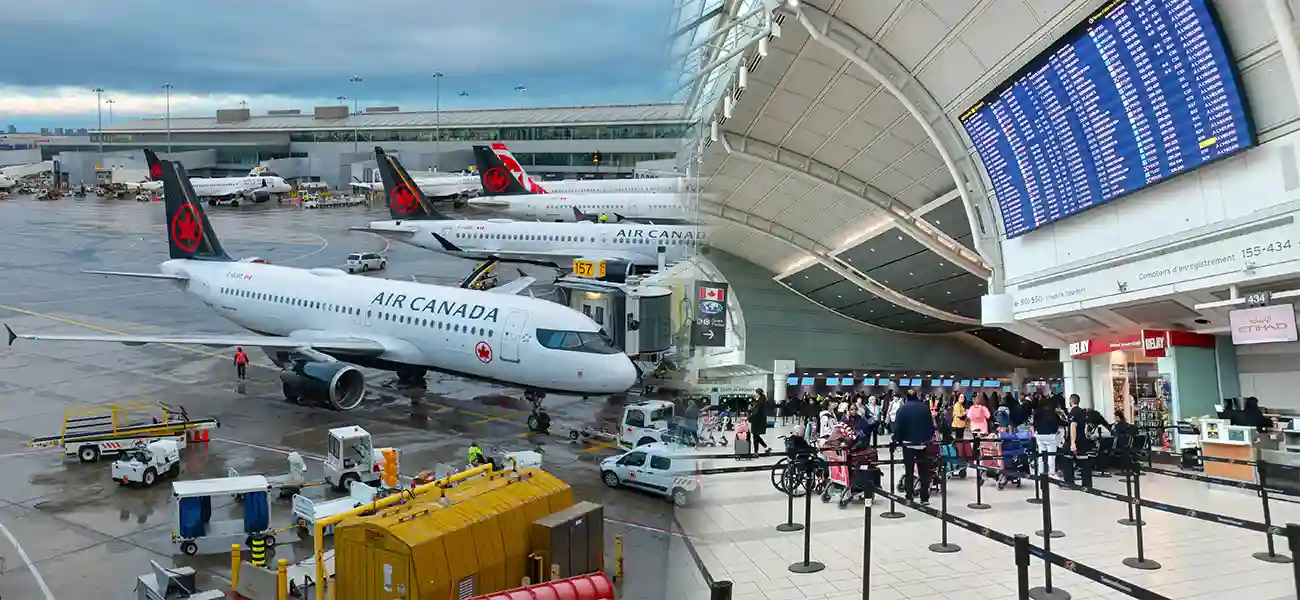
domestic flight and Airline’s
Canada is a vast country with a well-developed domestic
flight network that connects its major cities and regions. For newcomers,
understanding how domestic flights work can make travel within the country
faster and more convenient. Here's a detailed guide to domestic flights in
Canada:
1. Major Domestic Airlines in Canada
Several airlines operate within Canada, catering to
different budgets and travel needs:
Full-Service Airlines
- Air
Canada:
- Canada's
largest airline, offering extensive routes across the country.
- Features
include in-flight entertainment, meals, and baggage services (depending
on fare class).
- WestJet:
- Known
for competitive pricing and good service.
- Covers
major cities and regional destinations, with options for economy and
premium classes.
Low-Cost Airlines
- Flair
Airlines:
- Budget-friendly
with basic fares; additional fees for checked luggage, seat selection,
and snacks.
- Swoop:
- Operated
by WestJet, offering ultra-low-cost flights. Great for short trips with
minimal luggage.
- Porter
Airlines:
- Operates
primarily in Eastern Canada, with a focus on comfort and convenient
departures from smaller airports like Toronto’s Billy Bishop (YTZ).
Regional Airlines
- Jazz
Aviation (operating as Air Canada Express):
- Covers
smaller communities and regional airports, connecting them to larger
cities.
- Pacific
Coastal Airlines:
- Operates
primarily in British Columbia, serving smaller towns and remote areas.
- Bearskin
Airlines:
- Focuses
on Northern Ontario and Manitoba.
2. Popular Domestic Routes
- Toronto
(YYZ) to Vancouver (YVR):
- One
of Canada’s busiest routes. Travel time: ~5 hours.
- Montreal
(YUL) to Calgary (YYC):
- A
major East-to-West route. Travel time: ~4.5 hours.
- Toronto
(YYZ) to Halifax (YHZ):
- For
travel to the Maritime provinces. Travel time: ~2 hours.
- Vancouver
(YVR) to Whitehorse (YXY):
- Connects
the Yukon Territory to British Columbia. Travel time: ~2 hours.
- Ottawa
(YOW) to Winnipeg (YWG):
- Central
Canada connection. Travel time: ~2.5 hours.
3. Booking Domestic Flights
How to Find Flights
- Use
flight search engines like Google Flights, Skyscanner, or Kayak
to compare prices.
- Check
airline websites for promotions and last-minute deals.
Booking Tips
- Book
Early: Prices are generally lower when booked 2–3 weeks in advance.
- Be
Flexible with Dates: Mid-week flights (Tuesday/Wednesday) are often
cheaper than weekend flights.
- Travel
Light: Many low-cost airlines charge extra for checked luggage.
4. Baggage Policies
Baggage rules vary by airline and fare class.
- Carry-On:
- Most
airlines allow one carry-on bag and a personal item (e.g., a backpack or
laptop bag).
- Weight
limits range from 7–10 kg for carry-ons.
- Checked
Baggage:
- Low-cost
airlines often charge extra for checked luggage.
- Full-service
airlines like Air Canada include at least one free checked bag for
certain fare classes.
5. Travel Tips for Domestic Flights
- Arrive
Early:
- Arrive
at least 1.5–2 hours before your flight, especially at busy airports like
Toronto Pearson (YYZ) or Vancouver (YVR).
- ID
Requirements:
- You
must present a government-issued photo ID, such as a Canadian driver’s
license or passport.
- Flight
Delays:
- Weather
can impact flights, especially in winter. Check flight statuses online
before heading to the airport.
- Connectivity:
- For
connecting flights, allow at least 2–3 hours between flights to account
for delays and layovers.
- Regional
Airports:
- Consider
smaller regional airports like Billy Bishop Toronto City Airport (YTZ)
for convenience and shorter wait times.
6. Cost of Domestic Flights
Prices for domestic flights vary depending on distance,
airline, and booking time.
Examples of One-Way Ticket Costs (Economy):
- Toronto
(YYZ) to Vancouver (YVR): $250–$500 CAD
- Montreal
(YUL) to Halifax (YHZ): $150–$300 CAD
- Calgary
(YYC) to Edmonton (YEG): $100–$200 CAD
- Vancouver
(YVR) to Victoria (YYJ): $50–$150 CAD
7. Special Discounts and Deals
- Student
Discounts: Some airlines offer discounted fares for students. Check
eligibility with airlines like Air Canada or WestJet.
- Travel
Points: Use credit card points or loyalty programs (e.g., Aeroplan for
Air Canada or WestJet Rewards).
- Seat
Sales: Look for sales during holidays, Black Friday, or airline
anniversaries.
8. Alternative Travel Options
For shorter distances, consider alternatives to flying:
- Train:
VIA Rail Canada offers scenic routes, particularly in Eastern Canada
(e.g., Toronto to Montreal).
- Bus:
Companies like Greyhound or Megabus provide affordable options for
intercity travel.
- Car:
Renting a car can be economical for families or groups traveling to nearby
destinations.
By understanding these tips and options, newcomers can
navigate Canada’s domestic travel network with ease and confidence. Enjoy
exploring this beautiful country!